5 Secrets to Make Your Orchids Bloom Like Magic with One Simple Spoonful!
5 Secrets to Make Your Orchids Bloom Beautifully with One Simple Spoonful
- Understanding Orchid Needs
- Key Ingredients for Blooming
- Proper Care Techniques
- Mistakes to Avoid
- FAQ
Your gorgeous orchids may seem stubborn at times, refusing to bloom even with your diligent care. You might feel frustrated, wondering what could be missing in your routine. The secret often lies in combining the right care techniques with simple natural solutions. Exploring these methods can unlock the potential of your orchids, leading to stunning blooms that enhance your home’s beauty. Continue reading to discover how you can make these vibrant flowers flourish.
Understanding Orchid Needs
To create the ideal environment for your orchids, understanding their specific needs is crucial. Different types of orchids have varying requirements, but most share common necessities.
Light Requirements
Orchids thrive in bright but indirect sunlight. Exposure to direct sunlight can lead to leaf scorching. Position your orchids near a window covered with sheer curtains to provide gentle light.
Watering Needs
Overwatering is one of the main reasons orchids fail to bloom. Ensure your plants dry out between waterings. A good rule of thumb is to water every 7 to 10 days, depending on your environment.
Temperature and Humidity
Orchids prefer a temperature range of 65-75°F during the day and slightly cooler at night. Maintaining humidity levels around 50-70% helps prevent stress on the plants. Using a humidity tray or a humidifier can be beneficial.
Key Ingredients for Blooming
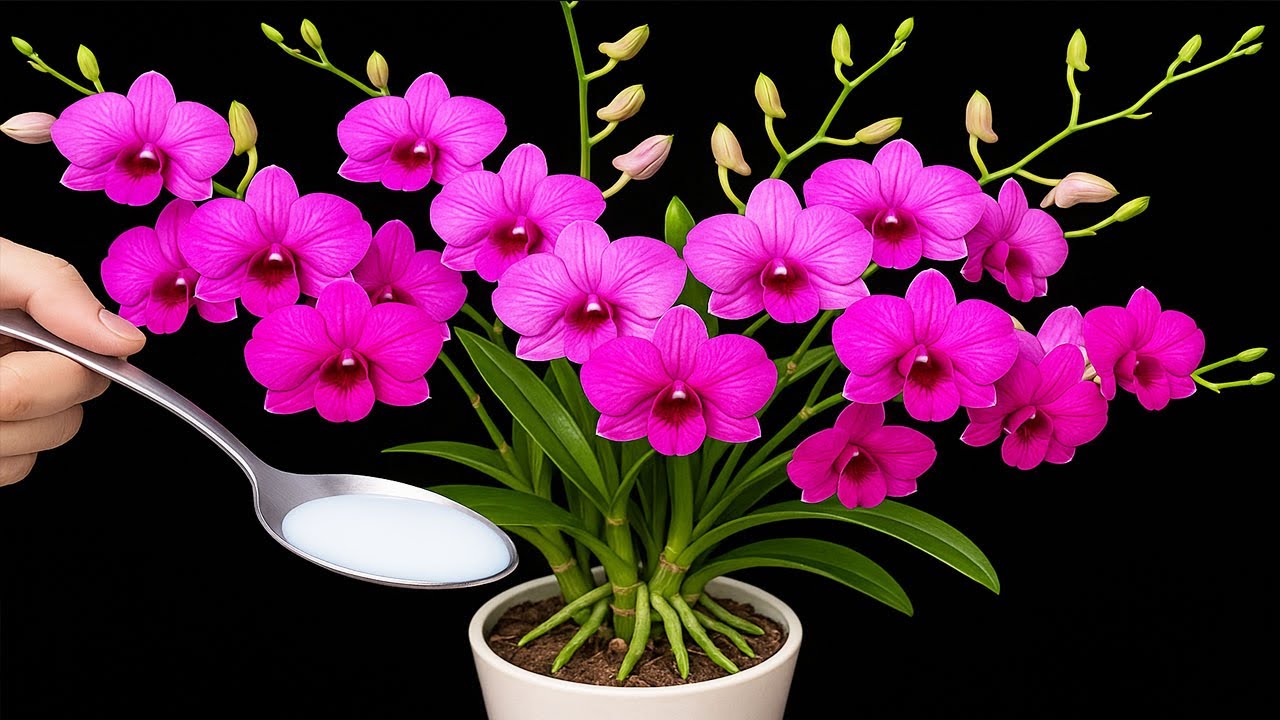
Using natural ingredients can significantly boost your orchids’ health and blooming capabilities. One simple spoonful can make a difference.
Baking Soda Solution
A mixture of baking soda and water can help prevent fungal infections. Combine 1 tablespoon of baking soda in a quart of water, mix well, and use it to water your orchids every two weeks.
Banana Peel Fertilizer
Banana peels are rich in potassium, an essential nutrient for flowering plants. Chop up a banana peel and soak it in water for a few days. Use this nutrient-rich water to water your orchids once a month.
Eggshell Boost
Eggshells provide calcium and other beneficial minerals to your orchids. Rinse and crush the eggshells, then add them to the potting medium. This method not only nourishes your orchid but also improves drainage.
Proper Care Techniques
Regular maintenance practices can enhance your orchids’ ability to bloom beautifully.
Repotting Schedule
Orchids usually benefit from repotting every one to two years. This helps refresh the soil and offers your plants new nutrients. When repotting, choose a medium suited for orchids, such as a mix of bark and sphagnum moss.
Pruning and Deadheading
Removing dead or yellowing leaves, as well as spent flowers, encourages new growth. After flowering, cut the flower stalk just above a node to promote a new bloom spike.
Fertilizing Practices
Using a balanced orchid fertilizer during the growing season can provide the necessary nutrients for blooming. Follow the instructions on the label, generally applying every two to four weeks.
Mistakes to Avoid
Certain common mistakes can hinder your orchids from thriving. Here are some you should steer clear of:
Over or Underwatering
As mentioned earlier, balance is key. Overwatering can rot roots, while underwatering can lead to dehydration. Always check the moisture level before watering.
Ignoring Light Conditions
Positioning your orchids in inadequate light can stunt their growth. Make sure they are receiving enough bright, indirect sunlight.
Forgetting to Fertilize
Neglecting regular fertilization can cause nutrient deficiencies. Incorporate a consistent fertilizing routine in your care practices.
FAQ
How often should I water my orchids? Water your orchids every 7 to 10 days, allowing the potting medium to dry out between waterings.
What should I do if my orchids don’t bloom? Ensure they are getting the right light, temperature, and humidity. Consider using natural solutions like banana peel fertilizer.
When is the best time to repot orchids? The ideal time to repot orchids is every one to two years, usually after they have stopped blooming.
In summary, understanding your orchids’ needs and using simple ingredients can elevate their blooming potential. What natural solutions have you tried for your orchids? Please share in the comments!