Discover the Pawpaw: How to Forage and Use This Native Fruit
“`html
Discover the Pawpaw: How to Forage and Use This Native Fruit
Finding free food is always a cause for celebration among homesteading enthusiasts, and the pawpaw is a prized yet often overlooked option. As the largest native North American fruit, pawpaws grow in 26 states from Texas to Canada and offer a flavor reminiscent of tropical fruits. Let’s explore what makes this fruit so unique.
What is the Pawpaw?
Commonly known as the Indiana banana, poor man’s banana, or bandango, pawpaws flourish in wetland regions across the United States. They are the only North American member of the annonaceae family, with distant relatives like the ylang ylang and custard apple found in equatorial regions.
Native Americans valued pawpaws as a vital food source, and they utilized the fibrous bark for creating baskets and nets. Even Thomas Jefferson admired pawpaws, growing saplings at Monticello and sending samples to Europe.
Rich in vitamin C and healthy fats, pawpaw fruit sustained the Lewis and Clark expedition for three days during their journey west. Despite their historical significance, many Americans have never tasted a pawpaw, but this little-known fruit is beginning to gain popularity as people rediscover its value and versatility.
Where to Find Pawpaw Fruit
Pawpaw trees thrive in river bottoms but have been expanding their range into higher, drier areas, thanks to booming deer populations that favor the trees over their competitors. These small understory trees have large ovular leaves that can grow over twenty inches long.
Pawpaw flowers bloom in spring, exhibiting beautiful burgundy colors. However, they emit a scent resembling rotting flesh to attract flies for pollination. Some enthusiasts even hang chicken skins nearby to enhance the attraction!
Pawpaw trees spread by sending runners from an original tree, so it’s common to find clusters rather than solitary trees. This genetic cloning can be a challenge for fruit production since genetic diversity is essential for fruitful yields. If you locate a productive pawpaw patch, make sure to revisit it regularly!
Tip: You might find local pawpaw sources through the Falling Fruit map, a collaborative tool for discovering foraging opportunities worldwide.
How to Harvest Pawpaw Fruit
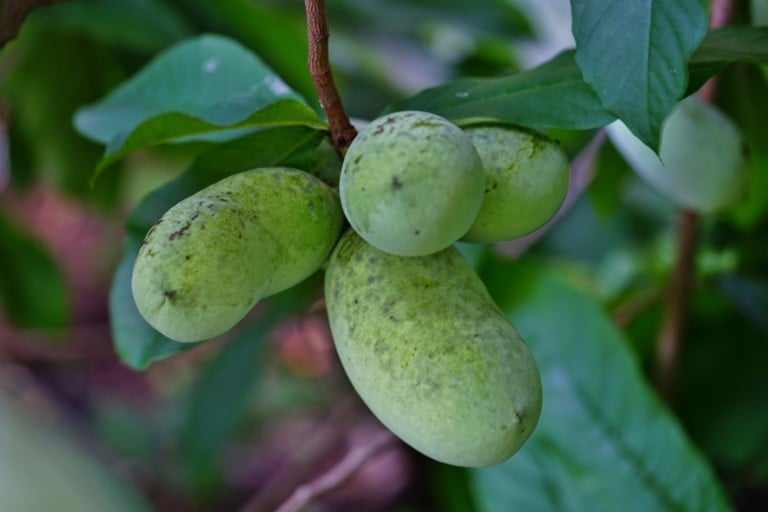
Pawpaw fruit is typically harvestable from late August through October. The fruits grow in clusters, resembling bananas, with each kidney-shaped fruit measuring between three to six inches long. Initially firm and green with black spots, the fruits soften and yellow as they ripen, becoming ready to pick when they emit a fruity aroma and feel similar to ripe peaches.
Be prompt in your harvest, as forest creatures may claim the fruits first. If you’re not ready to eat them immediately, unripe pawpaws can last in the fridge for up to two weeks before ripening on the counter.
Handle pawpaws with care since their thin skins bruise easily, which is one reason they aren’t sold commercially. The flavor can vary, often tasting like a mix of bananas, pineapple, and mangoes, with a custard-like consistency and large inedible seeds. This is a fruit best enjoyed with a spoon!
How to Use Pawpaw Fruit
To prepare pawpaws, slice them open, remove the large seeds, and separate the inner pulp from the skin. It’s often easier to scoop everything into a bowl to extract the seeds, as they tend to stick.
Pawpaw pulp can be stored in the freezer for months, while fresh fruit remains good in the fridge for about a week. The delicious pulp can enhance various recipes, such as:
- Baked goods like bread or cookies
- Blended into smoothies
- Incorporated into pudding
- Churned into homemade ice cream
- Fermented for use in homemade beers, brandies, and meads
Generally, you can substitute pawpaw for bananas or persimmons in most recipes. However, avoid making fruit leather, as it can cause severe nausea in some individuals. It’s advisable to try a small amount first to gauge your tolerance.
Order Pawpaw Fruit and Trees Online Today
If you’re fortunate enough to forage for pawpaw, you’ll discover a delightful culinary treasure. However, if you live outside their natural range, don’t worry! Fresh pawpaw fruit may be seasonally available at farmers markets or online. Websites like Earthy.com offer fresh pawpaws and frozen puree to try at home.
For those interested in cultivating their own pawpaws, purchasing trees or seeds online is an excellent option. By taking steps today, you can enjoy this nutrient-rich fruit for years to come!
Conclusion
The pawpaw, often overlooked, is a delicious and nutritious native fruit with a rich history and a multitude of uses. Whether you are foraging for them or ordering online, embracing this unique fruit will add variety to your diet and enhance your culinary adventures.
“`